

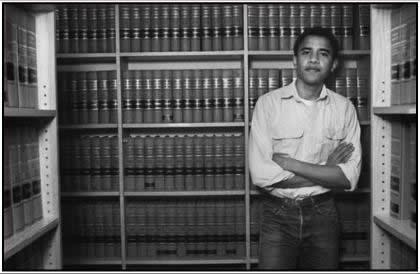
Last week, two community meetings were held to discuss the viability of where the Presidential Barack Obama Library should be placed. The first meeting held at last Tuesday at Hyde Park Career Academy High School and another one the following day at the Washington Park Field House – both attracting over 2,000 attendees combined.
What has become a hotbed debate around the country with the final locations narrowed down to the following cities; Honolulu, New York City and Chicago. The questions remain if Chicago is awarded the Obama Presidential Library where will it be. The competition has enforced the incredible South Side vs. West Side divide with each side discussing the importance of economic stimulation for their community.
The University of Chicago is rumored to be a lead contender with both President Obama and First Lady Michelle Obama having a long history with the university and ties to their South Side roots. Both prospective locations in Jackson Park and Washington Park would connect communities; Kenwood, Hyde Park, Woodlawn, South Shore and Englewood.
Opponents against having these sites are concerned about taking away the deep historical connection of reducing park land and driving up property project taxes long time homeowners and displacing low income residents in these areas.
A study commissioned by the University of Chicago by the Anderson Economic Group, analyzed the economic impact of a Barack Obama Presidential Library on Chicago’s South Side. Some of the key highlights of the study included the following:

- The annual economic impact to the City of Chicago would be $220 million, due primarily to an increase in visitors to the city. It would create 1,900 permanent new jobs, increasing the annual local earnings by $56 million.
- Construction of the library would have a $600 million economic impact on the city. It would create 3,280 local jobs for a total of $156 million in earnings over the course of the construction project.
- The study estimates that 800,000 visitors will come to the library each year, including 350,000 visitors from outside the Chicagoland area. The visitors would bring additional spending of $31 million on food and retail to the neighborhood near the library, enough to support 30 new restaurants, 11 new retail outlets and a new hotel.
A letter was sent to the Barack Obama Foundation on behalf of the four elected officials representing the proposed South Side Wards which included; Alderman Will Burns (4th Ward), Alderman Pat Dowell (3rd Ward), Alderman Willie Cochran (20th Ward) and Alderman Leslie Hairston (5th Ward) in their full support to bring the Presidential Library to that side of town.
Alderman Dowell explains why it’s vital that these community meetings take place.
“There’s been a lot of communication in both small and large community meetings over the last year to talk about the possibility about the President Barack Obama Library coming to Chicago. This is just taking it to another level and it’s getting ready to become a real potential opportunity. I think today’s and yesterday’s meeting is to take a real pulse from the community on whether or not they support this effort because it’s going to require potential park land and also some private, city, and some CTA land- especially if the location is in Washington Park. I think it’s a good opportunity to come and say what they feel because it’s still because there’s still a whole lot of work to do.”
Former President of the DuSable of African American History and Founder of the Museum Campus South organization, Dr. Carol Adams has worked early in this process of pitching for the South Side to acquire the Presidential Library.
“We have to work together, these different issues that organizations have for their cause where they call themselves holding the University of Chicago hostage; this is not about the University of Chicago. They won’t own the library. All presidential libraries are run by the federal government. It won’t belong to them; they’re not getting the land, they have to give up their land for this. The other largest owner of land in this card is the African American person- if there’s a profit to be made from selling your land, it would be him. This is great for our community, our development and generation of wealth.” said Adams.
At the Washington Park Field House meeting several community leaders made their pitch to the committee including Torrey Barrett- Executive Director of The KLEO Center, Donna Hampton-Smith- President of the Washington Park Chamber of Commerce, Timuel Black- Educator, Historian and Civil Rights Activist, Andrea Zopp- President and CEO of the Chicago Urban League among many of the key stakeholders in the room.
No stranger to the progress of building in the Woodlawn community, Dr. Byron Frazier- Pastor and Chairman of Apostolic Church of God and Network of Woodlawn just recently relocated from his Bronzeville home to the Washington Park neighborhood. He is in full support of the process of bringing community awareness and economic development to the various communities that would benefit from the library.
Brazier explains, “The first question is what do you want to build or don’t build. What we want to do is to have a library that is represented of the first African American President of the United States. That is represented of his African American roots and seen as an inspiration to not just the current generation but future generations to come.”
Chicago will wait for the final decision in March on where the Presidential library will break ground when both President Barack Obama and First Lady, Michelle Obama will release their final decision.
One thing that everyone is in agreement on- it better be in ‘Sweet Home Chicago’.