
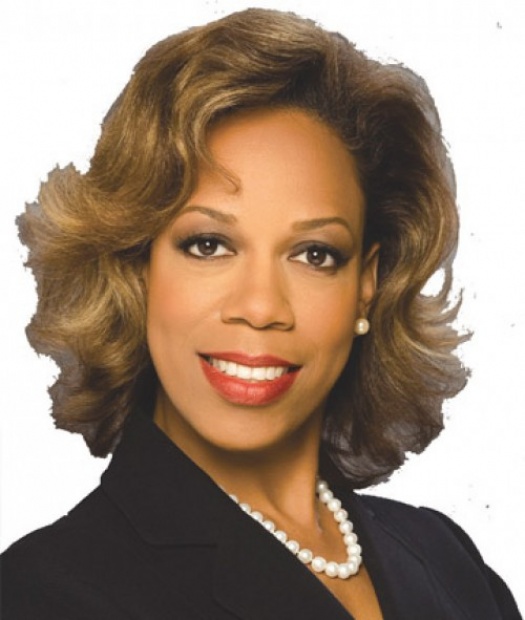
When I took this job as president of the Chicago Urban League, I was fully aware that there were people out there who believed that civil rights organizations had become irrelevant in this day and age. I challenge that assertion.
Not only are we relevant, but our founding mission%uFFFDeconomic empowerment through employment%uFFFDis as necessary as ever. Chicago’s African American community is hungry for programs and initiatives that will spur economic and community development, sustain families and help turn people’s lives around.
How do I know this? Because in the last two months, the League has signed up%uFFFD drum roll, please%uFFFD7,000 new members on Urban League Sundays as part of our new Partners In Faith initiative.
That’s right, folks%uFFFD7,000 new members! That’s a statistic that bears repeating, especially at a time when doubt is being cast on the viability of civil rights organizations based on membership, alone. Recently, the 40th anniversary of the assassination of Dr. Martin Luther King Jr., reignited the conversation over whether or not civil rights organizations were clinging to historical significance, yet slowly fading into nonexistence.
On April 5, a story in the Washington Post tried to make the case that shrinking membership in organizations such as the NAACP, the Southern Christian Leadership Conference and the Congress of Racial Equality suggests that these groups were on life support and surviving, barely, off name recognition.
The article, which was written by an African American, acknowledged that the National Urban League is still viable but less visible. I can understand why people would question the need for civil rights groups today. After all, you rarely hear about Black men being lynched anymore, or crosses burning on Black folks’ lawns.
Long gone are the days when Blacks were forced to use separate restrooms or sit at the back of the bus. Black and white children attend schools together and interracial couples can be seen holding hands in public. Every now and then, a Black CEO graces the cover of a national magazine as a testament to equal opportunity.
A Black man is leading the race for the nation’s highest office, for goodness sakes. What better benchmark is there to declare an end to the era of marches, sit-ins and freedom rides? But is the race for equality finished? We know better than that, don’t we? But just incase, the answer is NO. The race is not over.
While it is true that civil rights organizations were established to fight for justice, equality and changes in public policies that discriminated against African Americans, our missions have always extended far beyond headlinegrabbing issues such as the Rodney King beating, the Jena 6 or the reversal last summer of Brown vs. the Board of Education.
In Chicago, for instance, the Chicago Urban League was founded principally to help Blacks who had migrated from the South find work and set up communities. Today, lingering disparities in employment, income, education and homeownership persists.
Our programs and services have to e When I’m out speaking to groups of students, academics and business leaders, I frequently talk about how I developed a new vision for the Chicago Urban League that moved the organization away from a social service agenda to one focused solely on economic empowerment as a way to drive lasting social change.
I tell them how some people told me to be careful, not to move too fast. Others advised me to weigh the opinions of those who wanted to maintain the status quo against those who favored change. I chose change, then moved swiftly and boldly to implement projectNEXT, our new economic empowerment agenda.
The response has been remarkable. The truth is, in every organization, adaptability is essential to survival. The Chicago Urban League came to a crossroads and chose a new path. Chicago, I want to thank you for believing in the Urban League’s mission.
By signing up to become a member in this 91- year-old civil rights organization, you have demonstrated your trust and belief in us and have given us the opportunity to help you build a better life for you and your family.
There is strength in numbers and we’re growing stronger every day. We still have a long way to go, though. Recently, I read that statisticians predict it could take another 500 to 600 years for African Americans to achieve economic parity with whites, given the current rate of progress. While I hope it won’t take nearly that long, I’ve got a feeling the Urban League is going to be around %uFFFD and relevant %uFFFD for however long it takes.
______ Copyright 2008 Chicago Defender. All rights reserved. This material may not be published, broadcast, rewritten, or redistributed.
About Post Author
